
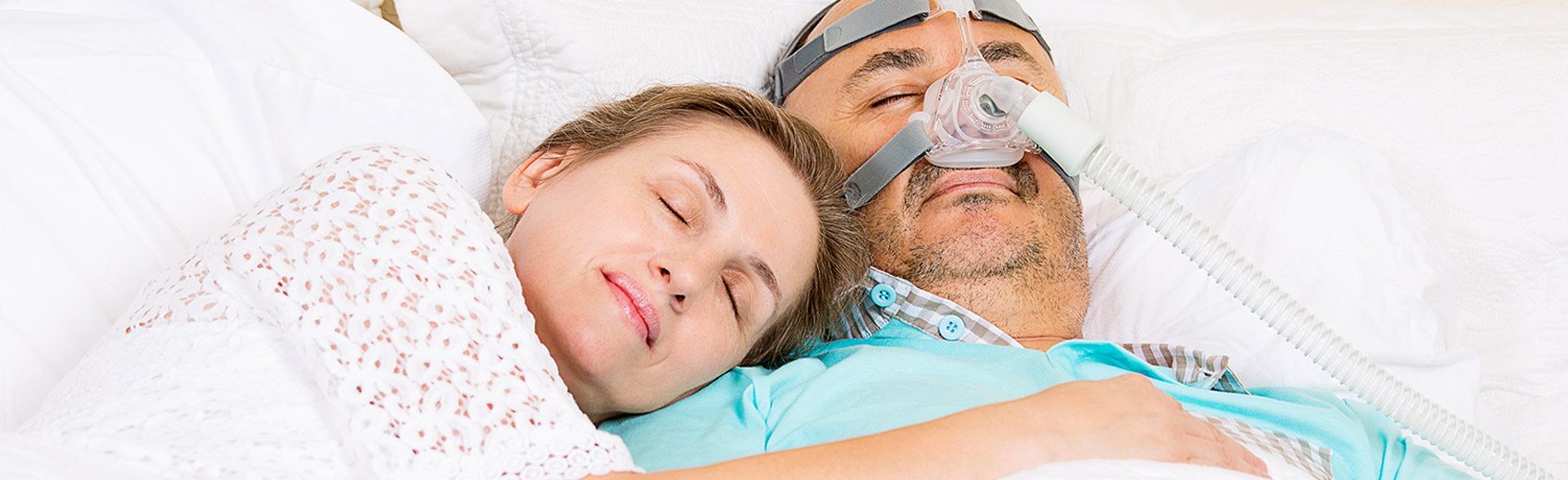
It’s estimated that as many as 18 million Americans have sleep apnea, according to the National Sleep Foundation. If you wake up feeling tired and groggy, it could be related to your oral health. Leading general dentists Drs. Susan Mazzei, Kelsey Esposito, and Ashley Nguyen specialize in diagnosing and treating sleep apnea for patients throughout Warrenville, Illinois. Before going one more restless night, schedule an evaluation at West Suburban Oral Healthcare. You can book your appointment either online or over the phone.
What is sleep apnea?
Sleep apnea is a chronic sleep disorder where your breathing suddenly stops and starts.
With sleep apnea, you’re likely to tense your jaw and grind your teeth at night. As you tense up your teeth, your brain gets a signal to wake up and take a breath, which ultimately disrupts your night of sleep.
There are several different causes of sleep apnea, although they all result in disrupted sleep.
With obstructive sleep apnea, for instance, your throat muscles relax, resulting in collapsed airways. This can happen if you’re overweight since your airways can’t support the extra pressure as you lie down.
In some cases, your brain doesn’t send proper signals to control breathing. This is known as central sleep apnea.
Some patients have both issues – collapsed airways and signal issues – which is called complex sleep apnea syndrome.
Will I know if I have sleep apnea?
Possibly. Most men and women who have sleep apnea experience similar symptoms. You might have sleep apnea if you:
- Wake up feeling tired and groggy
- Snore throughout the night
- Have frequent morning headaches
- Experience difficulty concentrating
- Have difficulty staying asleep
- Are irritable or have mood swings
It’s common for patients to have no recollection of snoring or waking up frequently, but their partner’s night of sleep is often disrupted.
How does a dentist treat sleep apnea?
General dentists are often the first medical professionals to recognize and diagnose sleep apnea. Not only does your dentist notice the signs of grinding, but they’re also going to ask you about related symptoms, like sore jaws.
Drs. Susan Mazzei, Kelsey Esposito, and Ashley Nguyen can help resolve sleep apnea issues by offering custom mouth guards (medically known as occlusal guards).
These mouth guards prevent nighttime grinding, so your brain doesn’t get the signal to wake up and breathe. Mouthguards can also help keep your lower jaw forward to help open up your airways.
If you think you have sleep apnea or haven’t found a successful solution after a diagnosis, book an evaluation at West Suburban Oral Healthcare either online, or over the phone.


Dr. Susan Mazzei is a skilled dentist specializing in prosthodontics. A
graduate of Northwestern
University Dental School, she completed a Certification in Prosthodontics before joining
the
faculty of Northwestern University Dental School as a Clinical Assistant Professor, where she
served for 12 years and became Assistant Professor Emeritus. Dr. Mazzei believes that excellent
oral health begins with education and prevention and is committed to continuing her education.
She is a Certified Functional Medicine Health Coach, a Charter Fellow in the American Academy of
Oral Systemic Health (AAOSH), and has completed the Bale and Doneen Method Preceptorship
Program.
Dr. Kelsey Esposito worked in healthcare advertising and communications before
realizing that
her passions were dentistry and patient care. She holds a BA in Economics and Fine Art from
Kalamazoo
College, a Premedicine Post-Baccalaureate Certificate from Northwestern University,
and a Doctor of Dental Medicine from The University of Illinois in Chicago. She is a member
of
the American Dental Association (ADA), Chicago Dental Society (CDS), Illinois Dental Society
(IDS), Academy of General Dentistry, American Academy of Cosmetic Dentistry, and AAOSH.
Dr. Marco Fajardo is a graduate of Northwestern University Dental School, where
he also served
as a part-time Assistant Clinical Instructor. He was a member of the University Dental
Associates of the University of Chicago too. In 1994, he formed the basis of West
Suburban Oral
Healthcare with Dr. Mazzei. He is now its Team Leader.
Dr. Ashley Nguyen studied at the University of Buffalo and Midwestern University in Downers
Grove, IL (dental school). She is a member of the ADA, CDS, IDS, and other local organizations.
She continues her education by attending dental conferences and seminars.